

Over there, p.1
Over There, page 1


Summary
A gripping romance spanning two continents…
Ruth Carroway is twenty years old and has lived in the shadow of her older brother, Frank, for as long as she can remember. Independent and head-strong, she can’t wait to escape the confines of her small hometown in Indiana. On December 7, 1941, the events a world away at Pearl Harbor set into a motion a series of changes in Ruth’s life that she never could have imagined.
With Frank at war, but still the center of his family’s attention, Ruth itches to do something, anything. Moving out, she soon finds herself rooming with Lillian, a young newlywed whose husband is also at the front. Ruth blossoms when she realizes that, not only is she “one of those girls,” it appears Lillian is as well. The war seems non-existent for the two women in the throes of new love until a sudden turn in events becomes the catalyst for Ruth’s decision to volunteer for nursing duty.
Landing in war-torn London, Ruth is forced to grow up quickly as she is thrown into the chaos and brutality of World War II. Along the way, she meets Helene, a sexy, enigmatic French nurse, eager to introduce Ruth to the ways of the world, and Tess, an all-business English nurse who she finds herself drawn to immediately.
Ruth is no longer the same small town girl from Evansville, Indiana and she is now faced with impossible choices.
Will she make the right ones?
over there
over there
rachel windsor
Sapphire Books
Salinas, california
Over There
Copyright © 2016 by Rachel Windsor. All rights reserved.
ISBN EPUB - 978-1-943353-56-9
This is a work of fiction - names, characters, places, and incidents are the product of the author’s imagination or are used fictitiously. Any resemblance to actual persons living or dead, business, events or locales is entirely coincidental.
All rights reserved. No part of this publication may be reproduced, distributed, or transmitted in any form or by any means, including photocopying, recording, or other electronic or mechanical methods, without written permission of the publisher.
Editor - Kaycee Hawn
Book Design - LJ Reynolds
Cover Design - Michelle Brodeur
Sapphire Books Publishing, LLC
P.O. Box 8142
Salinas, CA 93912
www.sapphirebooks.com
Printed in the United States of America
First Edition – Dec. 2016
Find out how you can get a FREE ebook at the end of this book!
This and other Sapphire Books titles can be found at
www.sapphirebooks.com
Dedication
For Gabby
Acknowledgment
As always, my first thank you goes to my wife, Gabby. As I think multiple times every day—lucky me.
Thank you to Chris and Schileen at Sapphire Books. What a privilege to work with this publishing house and these women.
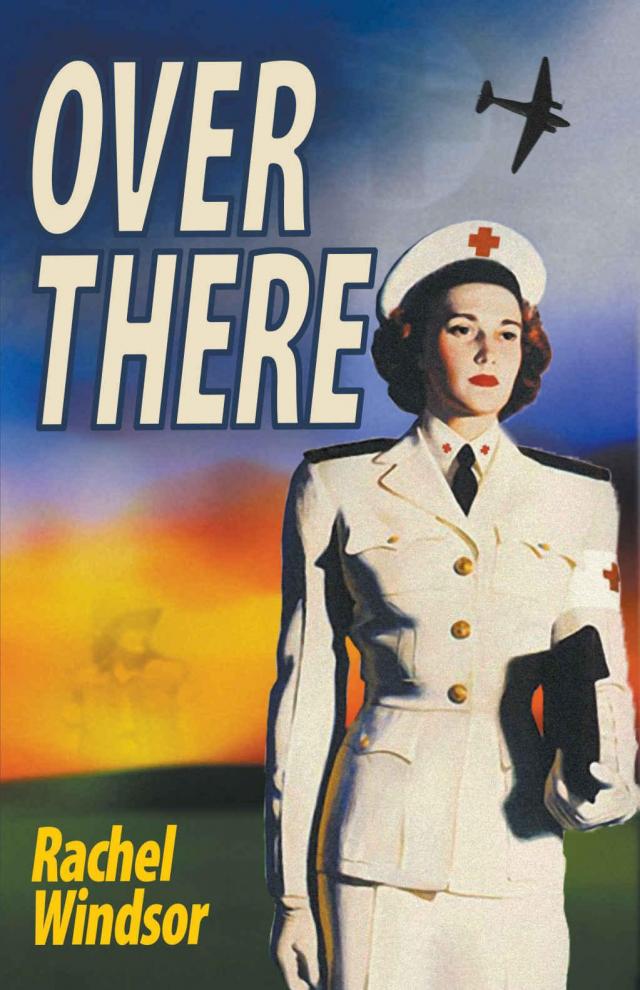
To Michelle Brodeur for my all-time favorite cover design. The cover for this book is perfect in every way.
Thank you to Kaycee Hawn for your sharp eyes and keen editing. Now that I’ve had the pleasure of working with you, I can’t imagine working without you.
To Lori Reynolds, my book designer. Once again, your style and skill allows my book to come out of the writing process looking amazing. Thank you.
Chapter One
Indiana had always seemed small and isolated to Ruth Carroway. At twenty years old and with a personality that her parents described with sometimes clenched teeth as “willful,” Ruth did not intend to spend the rest of her life in the sleepy little town of Evansville. It just seemed to be taking longer than she had planned to find a way out. But on that Sunday in early December, never had her hometown seemed so close to the exotic island in the Pacific that they were talking about on the radio. Hawaii. Ruth repeated the name several times in her head. It even sounded exotic. But the endless news reports from Pearl Harbor were anything but.
Ruth and her older brother, Frank, crowded with their parents in the living room around the family’s radio, listening with somber faces to the reports that had started at 1:30 that afternoon. The family had gathered after lunch to listen to a presentation on Great Plays, their usual Sunday tradition. What had started out as a promising entertaining program, a drama called “The Inspector General,” had been interrupted suddenly by a frantic report from an on-site reporter in Hawaii. The report had seemed so unreal, so fantastic, that the four had looked at one another with raised eyebrows.
“What’s this?” Pop had said around his pipe.
“Maybe a new program,” Frank replied.
Ruth had scowled at Frank, a small gesture for which she would later feel guilty. It was so like Frank to have an answer for everything. Before she could craft a retort, the reporter had continued.
The announcer sounded panicked and nearly breathless. “We have witnessed this morning the attack on Pearl Harbor and a severe bombing of Pearl Harbor by army planes, undoubtedly Japanese. The city of Honolulu has also been attacked and considerable damage done. This battle has been going on for nearly three hours…It’s no joke; it’s a real war.”
The next several hours saw the Carroways glued to the radio, listening in disbelief. The family knew that whatever was happening around the world, so far from their safe little home in their safe little town, it was real. They had spent the rest of the afternoon listening to the reports, eager for more information and horrified at the same time. Mother had been crying since the beginning, her handkerchief soaked with tears and her eyes red.
“Those poor boys,” she had repeated again and again.
The men of the Carroway family had reacted with a more aggressive stance.
“Sons of bitches!” Frank railed.
Mother removed her handkerchief long enough to scold her grown son. “Franklin!”
“He’s right, dear. Cowardly Japs. Raining hell on the poor boys while they slept. That’s not what soldiers do. We won’t stand for this.”
Neil Carroway had served in World War I, lying about his age, and seldom talked about it. Ruth had asked him about his experiences when she was younger, only to have her mother shoo her away. Her father hadn’t reacted at all; he had only stared off at some unseen memory. She had never asked again.
“The President will take us into war, won’t he, Pop?” Frank asked. His tone sounded hopeful.
“I don’t see any other way, son. We’re Americans. We can’t let them get away with this.”
Neil’s pronouncement sent his wife into a fresh flurry of tears as she rushed into the kitchen. Everyone knew what she was thinking. Pop was likely not going anywhere, not with his bad leg and his age. But Frank…young, strong Frank was another story.
Ruth imagined her handsome brother in an Army uniform, marching off to war. It was hard to align the image with the constant presence in her life. She shook her head, warding off the thought.
Neil didn’t follow his wife into the kitchen. It wasn’t his way. Nor did Mary Carroway expect him to. His only nod to her sensitivity had been to hold back additional commentary on one particular detail on the attack while she was in the room. “Radio says many of the sailors burned alive.”
Ruth’s hands came to her mouth in horror. She shook away an unbidden image of sailors her age, on a burning ship, aflame and screaming for help that would never come.
The day wore on into evening. Everyone was restless but the routine of life played on. Dinner was prepared and the Carroways sat down for their evening meal, circling the pine table at which Ruth had eaten nearly every meal of her life. Neil said a simple prayer as he always did, but added an extra missive, one that would prove prophetic.
“And give our family strength for the changing times that will be coming our way.”
Chapter Two
“And give our family strength for the changing times that will be coming our way.” By April of 1942, things were indeed different for the Carroway family, as they were for the world.
“Are you scared?” Ruth fiddled with an old baseball as she sat on Frank’s bed. Frank had sweated through his white tee shirt as he moved about his room, packing a footlocker.
“Sure.”
“Why are you packing so many clothes? The Army will give you uniforms.”
“I know that, knucklehead. I have to have something to wear during the trip, don’t I?” Frank studied his packing. “Although, maybe you’re right. I probably won’t need this much.” He extracted items, one by one, laying waste to the formerly neat trunk.
“Mom sure is a mess,” Ruth said. It was an understatement. Ever since Frank had volunteered for duty, their mother had spent most of her time praying, and the time that she didn’t spend praying, she spent crying.
Frank looked up. “I know.” He frowned and shook his head. “I feel bad about it but I don’t have a choice. I have to go. It’s my duty.”
Ruth nodded. Having grown up in a house with Neil Carroway, both she and her brother knew that there was no arguing with duty.
“You have a duty, too, you know.” Frank resumed his work on the trunk.
“I know, make sure I’m the faithful daughter,” Ruth said, her voice sarcastic.
“I’m serious. Mom needs you to be supportive, take over some of the things I do around the house. Dad, too.”
Ruth knew Frank was right. She hated seeing her brother go but the feeling was layered. Frank was their mother’s favorite. It was obvious despite Mary’s efforts to assure Ru th that “no mother ever has a favorite.” Truth be told, Frank was likely their father’s favorite as well. He was the perfect son—smart, strong, handsome. He was a good boy, Mary had always said. And now he was a good man, marching off to war. Ruth had an instinct that Frank’s wartime absence would make Mary’s affection for her oldest even more pronounced, and where would that leave Ruth? The pesky younger sister, often an afterthought. A young woman who had never gone anywhere or done anything particularly special. She scolded herself silently. What was she doing being so selfish at a time like this?
“I’ll tell you one thing, sis.” Frank leaned in conspiratorially, his eyes sparkling with mischievousness. “Being short on the list to be sent over there has done wonders for my love life.” He smiled broadly.
“What?”
“Girls are happy to give a soldier a fond farewell. And I do mean fond.” Frank winked.
“Franklin Carroway! You’re awful!” Ruth laughed, despite her words.
“That’s not what the girls say.” Frank narrowly avoided the pillow that Ruth threw at him. “But listen, I don’t want you being like the other girls. Don’t let these fellows heading over there sweet talk you into…giving fond farewells.” Frank’s eyes were serious.
Ruth felt a mixture of pleasure that her brother cared about her and irritation that he was telling her what to do. It was her usual sentiment when it came to Frank. She pulled a face. “Don’t worry. I have no interest in giving any boy a fond farewell or any other kind of farewell, for that matter.”
Frank nodded, satisfied with the answer. He knew that the emphatic denial from his sister wasn’t a pat protestation or for his benefit. Ruth had never been boy-crazy, unlike many of the girls in town. In fact, if Frank had been more observant, he might have realized that he needn’t have bothered giving Ruth the talk because his sister appeared to be wholly uninterested in dating.
After removing another pair of trousers from his suitcase, Frank looked at Ruth. “How about this?”
Ruth nodded her approval. “Better. You have to be able to carry the thing, after all.”
Frank leaned all of his weight on the case and snapped it shut. He patted it. “That should do it.” He sat down on the bed, resting his elbow on the trunk.
Ruth drew her feet under her body and turned toward her brother. “What do you think it will be like?”
“I don’t know. Dad talked to me the other day a little about his time in the Navy. It was mostly about the friends he made, though. He still didn’t say much about the actual war.”
“He never does. But I would have thought he might change that with you going away. You know, father/son stuff.”
Frank nodded. “I thought so, too. I could have asked, I guess, but you know how he is about that.”
“I know. Do you think you’ll be like that when you come back?”
Frank considered and stared at the ceiling for a moment before responding. “Hard to tell. Something made Dad that way. Maybe that’s how everyone is when they come back.”
Ruth traced an imagined pattern on the worn suitcase. “Maybe. But I want to know more about it when you’re back. Do you promise to tell me everything?”
Frank laughed his easy laugh. “Promise.”
The two siblings sat for a moment, each lost in their own thoughts. They were Neil Carroway’s children and, because of that, had a bent toward internalizing things, even important things. Ruth did not plead with her brother to be careful and to make sure he did, in fact, come back. Frank did not tell Ruth that he loved her and wanted her to be strong if he didn’t make it home. Even so, each was comfortable with the way they were leaving one another. Both knew, to some degree, what the other was thinking. Ruth broke the silence.
“So, which girls have been the fondest?” Ruth asked, her smile playful.
“A gentleman never kisses and tells.”
Chapter Three
A paper map of the United States hung over Ruth’s bed, held in place by pushpins and slightly curling at the corners. Ruth’s goal was to travel to each of the forty-eight states. The map gave bleak testimony to her progress so far: exactly two. Indiana, of course, and a brief foray into the western part of Ohio to visit her mother’s family when she was fifteen. Ruth lay on her bed, staring at the map and doing math in her head. At this rate, I’ll have to live to be almost 500 years old in order to see all of the states.
Her room had become a place to escape the constant reminders of her brother’s absence. Frank’s room was exactly as it had been on the day he left, at Mary’s insistence. Even a pair of shoes that Frank had left behind lay in the middle of the floor, a housekeeping slight that Mary normally never would have tolerated. Frank’s conspicuous absence wasn’t confined to his bedroom. Mary had created a shrine of sorts in the living room on a small table. The centerpiece was a large, framed picture of Frank on his high school graduation day. His favorite baseball glove, well-worn and the color of tobacco, rested alongside a school ribbon for a long-forgotten spelling bee. Mary kept the three letters that the family had received from Frank stacked on the table and neatly re-arranged them every time she re-read one, which was daily.
“You okay, dear?” Mary asked as she entered with a load of clean laundry.
“Sure, Mom. Can I help you with that?”
Mary placed the laundry on Ruth’s bed and sat down beside her daughter. “Just dropping off.” She patted Ruth’s leg. “Thinking about your brother?”
The truth was Ruth hadn’t been thinking about Frank. She’d been wondering when she’d ever get to see the world. But that information would make her mother cross, so Ruth simply nodded.
“I’ve found that helping with the war effort gives me some comfort. I know it’s for all of the boys over there, but in my mind, I’m doing something for just Frank. Does that make sense?”
Again, Ruth nodded. The family had been active in home front efforts, from Neil’s victory garden (twice the size of anyone else on the block!) to Mary’s tireless work coordinating rubber and tin drives. “That’s a good idea. I can help you with the drives.”
“I was thinking of something else for you. You know Lillian Reed two blocks over?”
Evansville was a small town and people Ruth’s age tended to know one another. She was familiar with Lillian, having been in high school two years behind her. She knew that Lillian and her newlywed husband, Gerald, lived nearby and the women exchanged friendly waves when they saw one another. “Sure, but what’s that got to do with helping out?”
Mary’s face became animated, a welcome change from her worried countenance that had become near permanent since the start of the war. “Some of the girls and I have been working on a victory at home group, trying to support the younger women who are war brides. It can be so difficult for them, many newly married, some with babies, with their husbands called away. Lillian’s husband, Gerald, is on the front and they’ve barely been married a year. It might be nice if you made a point to visit her often, make sure she’s okay, that sort of thing.”
Ruth thought that unsolicited visits from a woman who didn’t understand what she was going through were likely the last thing that Lillian Reed wanted, but she didn’t want to disappoint her mother. “That’s a great idea. I’ll stop by tomorrow.”
Mary’s smile was worth what Ruth expected to be an awkward, one-time inconvenience. “That’s wonderful, dear. I imagine it will do you both some good.”
****
As soon as she knocked on the door to Lillian Reed’s small but cozy home the next day, Ruth felt a stab of nervousness. Would Lillian think she was being intrusive? Why in the world would talking with a woman who she barely knew make her feel better about her husband being at war? Why had she let her mother talk her into this? Ruth fidgeted with the wrapped loaf of zucchini bread that Mary had insisted Ruth take with her.






